
Navigating the Academic Job Market: Tips for PhD Graduates
Embarking on the journey toward a PhD is a monumental achievement. However, as you near the end of this academic pursuit, a new challenge emerges: navigating the academic job market. This phase can be daunting, but with the right strategies and mindset, you can turn it into an exciting and rewarding experience. In this blog post, we’ll explore practical tips to help you succeed in the academic job market, emphasizing the importance of personal goals and the myriad possibilities available through online offers.
Setting and Achieving Personal Goals
Before diving into the specifics of job hunting, it's crucial to establish and prioritize your personal goals. What do you hope to achieve with your PhD? Are you aiming for a tenure-track position, or are you open to other opportunities such as research roles, industry positions, or teaching at different educational levels?
Setting clear, achievable goals will not only guide your job search but also keep you motivated and focused. According to a 2020 survey by the American Council on Education, approximately 35% of PhD holders pursue careers outside academia, indicating the vast possibilities available. Reflecting on your passions, strengths, and long-term aspirations can help you chart a path that aligns with your personal and professional objectives.
Crafting a Standout CV and Cover Letter
Your curriculum vitae (CV) and cover letter are your first impressions on potential employers. These documents should highlight your academic achievements, research experience, publications, teaching experience, and other relevant skills. Here are some tips to ensure they stand out:
1. Tailor Your CV and Cover Letter: Customize your CV and cover letter for each job application. Highlight experiences and skills that are most relevant to the position you’re applying for.
2. Showcase Your Research: Detail your dissertation, research projects, and any publications. Emphasize how your work contributes to the field.
3. Highlight Teaching Experience: If you have teaching experience, make sure to include it. Highlight courses taught, responsibilities, and any innovative teaching methods you employed.
4. Professional Presentation: Ensure your CV and cover letter are well-organized, free of errors, and professionally formatted.
Leveraging Online Job Platforms
The rise of digital platforms has revolutionized the job search process. Websites like HigherEdJobs, ChronicleVitae, and Academic Jobs Online offer a plethora of academic job listings worldwide. Additionally, LinkedIn is a powerful tool for networking and job hunting. Here’s how to make the most of these platforms:
1. Create a Strong Online Presence: Ensure your LinkedIn profile is up-to-date, professional, and reflective of your academic accomplishments.
2. Join Academic Groups: Participate in LinkedIn groups relevant to your field. Engage in discussions, share insights, and connect with other professionals.
3. Set Job Alerts: Many job platforms allow you to set alerts for specific types of jobs. This feature ensures you don’t miss out on opportunities that match your criteria.
Networking: Building Professional Relationships
Networking is a cornerstone of the academic job market. Building relationships with colleagues, mentors, and professionals in your field can open doors to job opportunities and collaborations. Here are some networking strategies:
1. Attend Conferences: Academic conferences are excellent venues to meet other researchers, present your work, and learn about the latest developments in your field.
2. Engage with Your Institution: Participate in departmental seminars, workshops, and social events. Establishing a presence within your academic community can lead to valuable connections.
3. Seek Mentorship: Identify mentors who can provide guidance, feedback, and support throughout your job search process.
Preparing for Interviews
Securing an interview is a significant milestone in the job search process. Preparation is key to making a strong impression. Here are some tips for academic job interviews:
1. Research the Institution: Understand the institution’s mission, values, and recent developments. Be prepared to discuss how your work aligns with their goals.
2. Practice Your Presentation: Many academic interviews require a job talk or presentation. Practice delivering your presentation confidently and clearly.
3. Prepare for Common Questions: Anticipate questions about your research, teaching philosophy, and future plans. Practice your responses to these questions.
Exploring Online Teaching Opportunities
The demand for online education has surged in recent years, creating new opportunities for PhD graduates. Online teaching positions offer flexibility and the chance to reach a diverse student population. According to a report by the National Center for Education Statistics, enrollment in distance education courses increased by 93% from 2019 to 2020. Here’s how to explore online teaching opportunities:
1. Search for Online Institutions: Look for institutions that specialize in online education, such as the University of Phoenix, Southern New Hampshire University, and Western Governors University.
2. Highlight Online Teaching Skills: If you have experience with online teaching or using digital tools, make sure to emphasize these skills in your applications.
3. Consider Adjunct Positions: Many online institutions hire adjunct faculty. These positions can be a stepping stone to full-time opportunities.
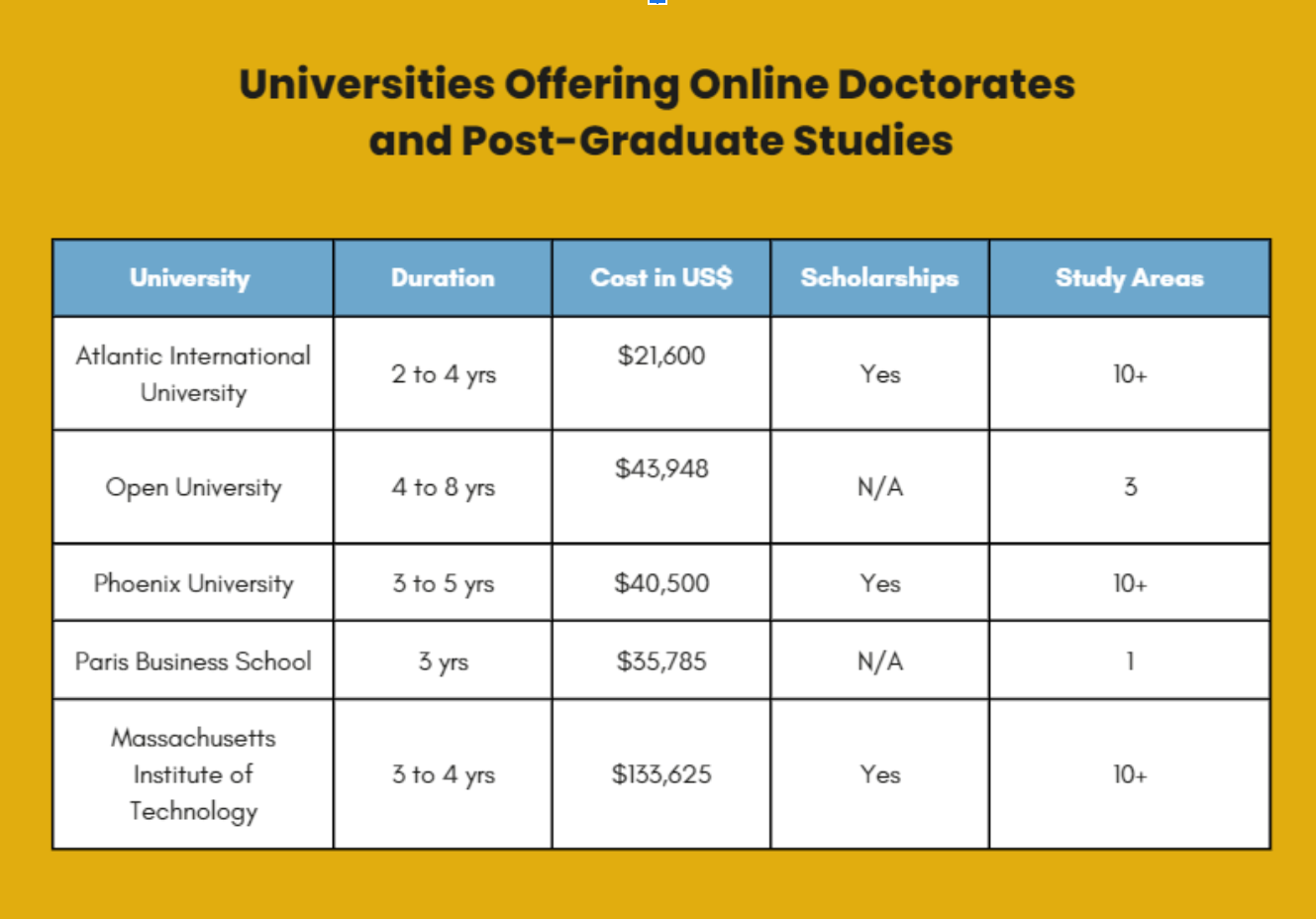
This comparative table can be very useful for you to be able to buy the options that currently exist in online Doctorates:
Embracing Non-Traditional Career Paths
While many PhD graduates aim for tenure-track positions, it’s essential to remain open to non-traditional career paths. The skills you’ve developed during your PhD—critical thinking, research, data analysis, and communication—are highly transferable to various industries. Here are some alternative career paths to consider:
1. Industry Research and Development: Companies in fields such as biotechnology, pharmaceuticals, and technology often seek PhD graduates for research roles.
2. Government and Policy: PhD holders can contribute to policy development and analysis in governmental and non-governmental organizations.
3. Consulting: Academic consultants provide expertise to educational institutions, businesses, and non-profits on various projects.
Conclusion: Achieving Your Goals
Navigating the academic job market requires a strategic approach, resilience, and an open mind. By setting clear personal goals, crafting standout application materials, leveraging online platforms, networking, and preparing thoroughly for interviews, you can increase your chances of success. Remember, the path to achieving your goals may not always be linear, but with dedication and adaptability, you can find fulfilling opportunities that align with your passions and skills.
As you embark on this journey, take advantage of the wealth of resources available online, stay connected with your academic community, and remain open to diverse career possibilities. The academic job market is competitive, but with the right strategies and support, you can navigate it successfully and achieve your professional aspirations.
For more tips, resources, and community support, visit doctorateandpostdoctorate.com and join our vibrant community of PhD and postdoctoral professionals.